Raising earthworms is one of the easiest ways you can go green and reduce the amount of trash entering our landfills and water systems.
Instead of throwing your kitchen scraps in the garbage can or down the sink disposal simply feed them to your worms! And if you
enjoy gardening this is a great way to save money -- your worms will produce fertilizer for life! Earthworms can produce more
compost, in a shorter time, with less effort, than any other tool known to the gardener or farmer. The compost which is produced by
earthworms is of the highest grade, containing not only greater amounts of mineral nutrients in soluble form, but also containing a high
percentage of castings that help to form soil aggregates, leading to a permanent improvement in soil structure. Are you a
fisherman, too? Why pay $4.00 for a dozen worms when you can raise them yourself?
Whatever your reason for raising earthworms, you will enjoy watching your critters grow, reproduce and recycle!
There are three types of composting worms and one type of garden worm available here at Worms4Earth.com, I will list the three
types of composting worms in this section. You can read about the garden worms further down the page. The Red Wiggler is also known as
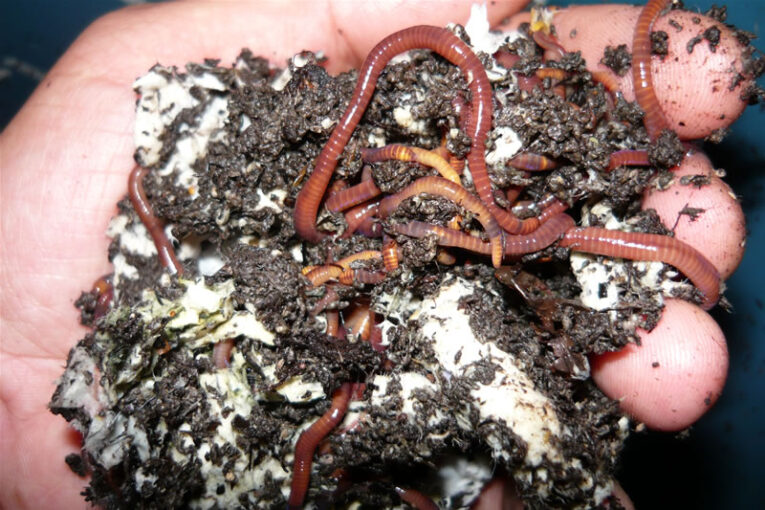
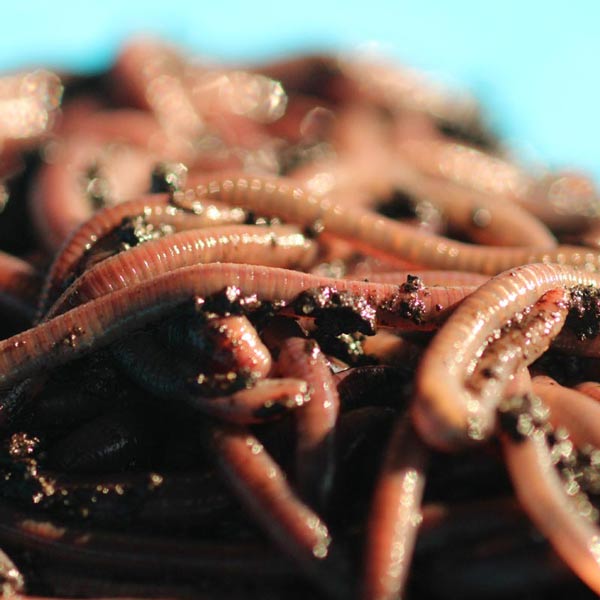
Eisenia foetida, the manure worm or brandling worm. This voracious eater is definitely the beginner's choice because
of it's adaptability to a wide range of living conditions as well as the ability to process large amounts of organic material.
Although this hardy worm will survive temperatures close to 40°F, they prefer bedding temperatures between 68°F and 80°F.
They are hardy enough that, if acclimated, they can live in bedding as hot as 100°F. If your needs are strictly composting,
this is your worm of choice. Another benefit is that because this is a small earthworm you can easily provide live food for your
aquarium fish and turtles.
Click here to Buy Red Wigglers >>
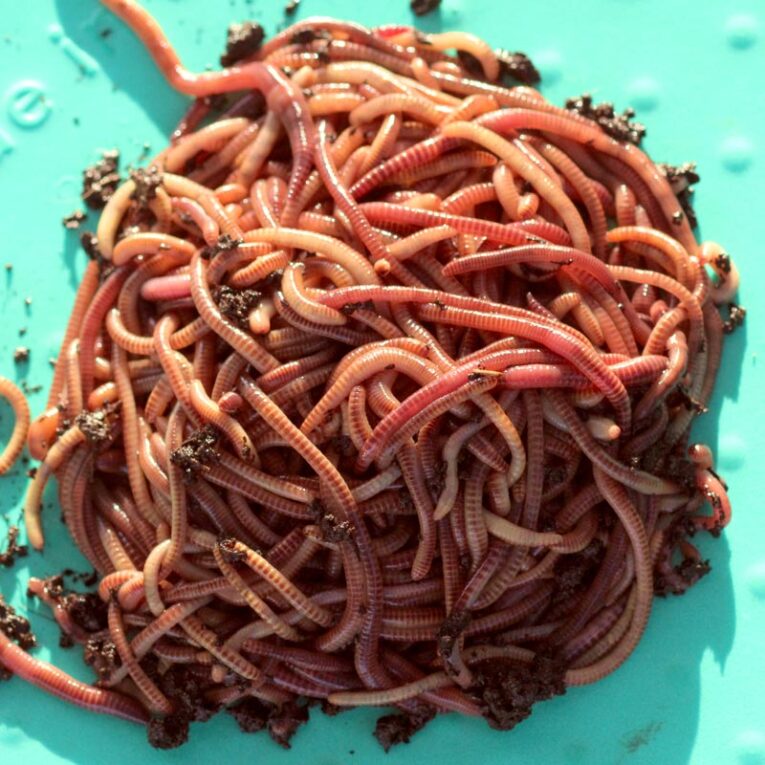
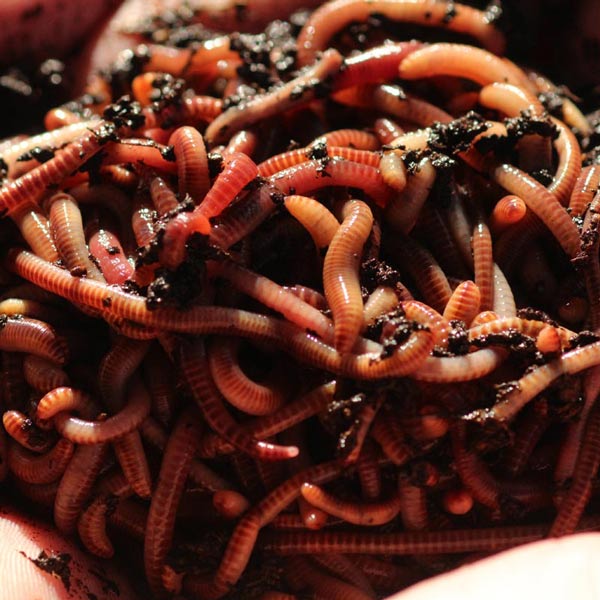
The European Nightcrawler is also known as Eisenia hortensis, the Belgium nighcrawler or super red.
This composting worm is much larger than its cousin the Red Wiggler. It has quickly become known for
being a great bait worm for it's size and ability to live longer on the hook as well as it's tolerance of salt
water. This hardy worm will survive temperatures close to 40°F, but prefers bedding temperatures between
68°F and 80°F. Europeans are easy to raise; just keep in mind that if you want them attain their
potential size you will need to raise them in manure and feed them grain or corn.
Click here to Buy European Nightcrawlers >>
The African Nighrcrawlers is also known as Eudrilus eugeniae (you DRIL us you JEN ee eye).
This is a large tropical worm species that tolerates higher temperatures than it's cousins listed above.
The African Nightcrawler enjoys a bedding temperature of 70° - 90 °F and consumes large amounts of organic
material from kitchen scraps to manure. If you live in especially warm areas this will be the worm for you. Keep
in mind that this worm is sensitive to colder temperatures and will perish if exposed to bedding temps below 45 °F.
This worm is very popular in the southern U.S. because of the lack of freezing temperatures. This is the longest of
the three composting worms and produces a lot of compost as well as breeds quickly.
Click here to Buy African Nightcrawlers >>
Earthworms need only a few requirements in which to successfully live and breed. These requirements are moisture, darkness,
and food. These conditions can be found in any outdoor compost pile, which is definitely the easiest type of worm
system to maintain. But, because these requirments are so easily produced, many people choose to build a bin they can
keep indoors, which also has its advantages.
Many people who are new to raising earthworms begin raising them in a
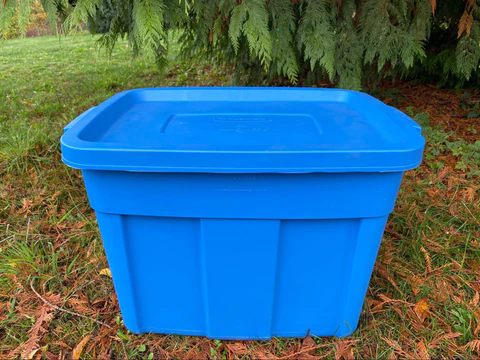
Do-It-Yourself plastic storage bin or a manufactured worm bin system. The convenience of portability along with the fact that most folks will not be raising populations in the tens of thousands makes the indoor worm bin system an easy project. And for those who are contemplating raising worms on a large scale, the worm bin is a smart way to learn how to raise them in a controlled environment before making a big investment. Because the extremes of heat and cold climates can be harmful to earthworms, raising them indoors ensures that their environment will always be climate controlled. You can put the bin in your garage (if cool), basement, closet, spare bedroom or your porch. If you decide to keep your bin outside, keep it away from direct sunlight. For those of you living in the south, putting your bin outside may be too hot during the summer months -- the combination of heat and humidity definitely becomes a factor when raising earthworms in a plastic bin that isn't designed to insulate against that kind of weather.
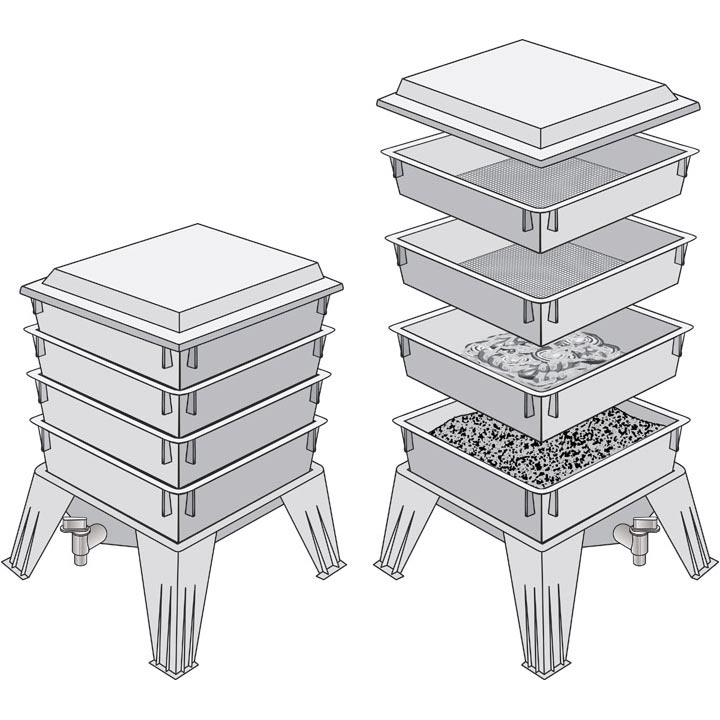
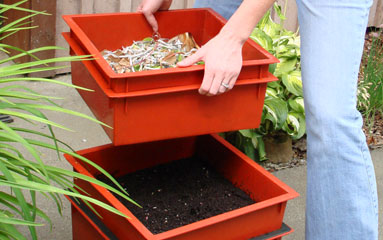
Check out the Get Started web page to learn how to build your own do-it-yourself bin. If you don't want to build your own, I also offer an excellent product made from recycled plastic right here in the U.S.A. It is called the Worm Factory Worm Bin and it is an upward migration, multi-tiered system. For more info, check out the Worm Factory Worm Bin web page.
If
you decide to keep your worm bin in the garage keep in mind that worms will bake in a closed garage with no air conditioning. I can tell you from
personal experience that earthworms will not do well in a
plastic storage container sitting in a hot garage with temperatures exceeding 100° F in the middle of
the summer. Plastic bins are not insulated so the hot
ambient air temperature will easily transfer to the contents of your
bin. If you don't have a basement, keep them in a utility
or spare bedroom.
Hey all of you gardeners out there -- did you know that earthworms are the most efficient composters
in nature? Your pile will be composted ten times faster with earthworms
than without them. One of the advantages of a maintaining a garden compost pile is that the finished
vermicompost is conveniently close to your fruits and vegetables. Making
a compost pile is easy -- just get yourself some chicken wire
and make a simple enclosure (this is optional), find a nice shady spot, rake up some dead leaf or grass
mulch and add some kitchen scraps. Water thoroughly and add earthworms in a week or two.
You can add any of the three types of composting worms listed above to your compost pile. You'll even
discover that your compost pile will begin to attract a lot of the native species of worms you have in
your yard (this only applies to areas that have native species -- some places may not have earthworms
such as New Mexico and Arizona). To add them to your pile simply dig a hole in the
top of your
pile, place your worms in the hole, and cover them up. You'll want to keep your pile watered,
but not soggy as this could make you pile heat up too fast.
When you turn your pile use a pitch fork if you have one.
You will always run the risk of injuring or killing a few worms when you turn your pile, but a
pitch fork is less intrusive than a shovel and will keep your losses to a minimum.
You will want a bin that gives enough space to house your worms and bedding. For do-it-yourselfers, an 18
gallon (give or take 2 gallons) bin is a good size to start with. Starting with 3 pounds of worms
gives you a good amount to process your kitchen scraps. This amount also allows enough room for your
earthworms to reproduce as your worm bin can hold upwards to around 9 pounds of worms.
Use only opaque bins. See-through bins will stress your earthworms as they will continually dig toward
the center of your bin trying to get away from light.
If you choose to go with a manufactured bin, a 4 tray model is sufficient for 6+ pounds of worms. You
can also add more trays later if you want to expand the composting capacity of the system.
There are several types of bedding that you can use. I'll outline the most popular types and list some pros and cons of each type.
A readily available source of bedding is newspaper. You will need to shred the
paper before putting it in your bin. You can hand shred it or use machine
shredded paper. In my opinion, though, hand shredding is better as it doesn't
clump or get matted together. If you choose to hand shred your paper make sure
the strips are no greater that 2-3 inches wide. You will also need to moisten
the paper before adding it to your bin. You can mist it with a spray
bottle or soak it and wring out so it isn't soggy. One of the advantages of
paper is that worms can survive in it without adding any kitchen scraps.
But, although they won't starve to death eating just
paper, a paper-only diet will produce very small worms.
Pros: Readily available, clean, no dust, odorless, easily prepared (if
machine shredded). Cons: Tends to matte, making it difficult to bury waste, preparation time (if
hand shredded).
This has long been the composter's choice for raising earthworms. It has excellent moisture retention
and is readily available from your local garden or home improvement store. You will need to moisten
the peat before adding to your bin. Soak until completely saturated, then squeeze until
just damp like a sponge. And... although worms will consume peat, you must add other food such
as kitchen scraps or paper because peat has no nutritive value.
Pros: Readily available, retains moisture. Cons: Recognized as being environmentally unsustainable, can be acidic.
Because peat can to be slightly acidic, I recommend soaking your peat for 24 hours before putting
in your worm bin OR adding a cup of lime to the water if you don't want to soak for that long (the calcium in the
lime raises the pH). You can also add a 1-2 teaspoons of lime to the kitchen scraps each time you add food to
your bin. Crushed eggshells will also raise the pH.
If you choose to add lime to your bin, make sure you don't buy
slaked/hydrated lime. Slaked and hydrated are toxic and will burn your earthworms. Slaked/hydrated
lime is used in making mortar and cement.
Manure can be used as either bedding or food and is generally used for outdoor worm beds
and compost piles. You can use rabbit manure, composted cow or horse manure to top
off your bin if you use peat as bedding. Rabbit manure is especially attractive for
worm farmers because it is a "cold" manure -- it does not need to sit for weeks
composting before adding to your worm bin. The manure already contains loads
of microorganisms that earthworms thrive on. Earthworms LOVE manure and thrive on
the nutrients available within it. Manure is a natural habitat for composting
worms and contain many of the organisms vital to an earthworm's growth.
Pros: Highly nutritional, often free when obtained from local stables or farms. Cons: Fresh cow and horse manure will heat up when fresh and needs to compost several
weeks before use. May contain de-worming drugs.
There is one potential downside to using horse and cow manure; if the animals
were given de-worming drugs this could be fatal to your worms.
Any amount of de-worming drug the animal's body did not absorb will
be present in their stool. A good rule of thumb is to only use composted manure that is at least two months old.
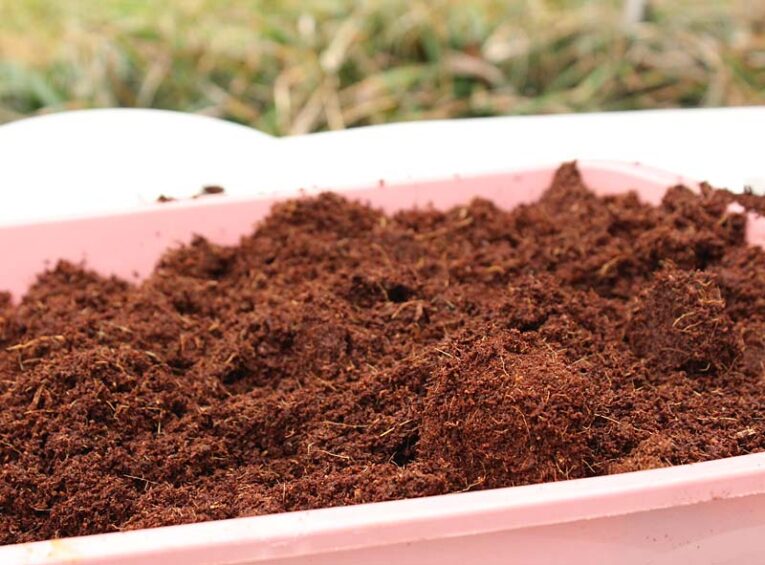
Coconut fiber, or coir, is a renewable material that comes primarily
from India and Sri Lanka.
It is becoming more popular with organic composters as well as the hydroponic growing industry.
It may be a bit pricier that some other bedding material, but you will be satisfied
to know that you are using a renewable of bedding when compared to peat moss. But,
just like peat, your worms cannot survive in coconut fiber alone.
Pros: Clean, odorless, mixes well with other bedding, retains moisture well, renewable source. Cons: More expensive than other bedding material, more difficult to obtain.
It is always a good idea to "turn" or "fluff"
your bedding at least once a week. You can do this by digging down to the bottom and bringing
the bedding to the top. This ensures that plenty of air is in contact with the contents of
your bin. You want your bedding to have plenty of oxygen so decomposition remains accelerated,
plus it makes it easier for your worms to crawl through it.
The earthworm is an eating machine. It literally eats the earth as it burrows through it. Material
that is too large to ingest will be pushed aside with its "head" (prostomium). Worms don't have
teeth, so the material they eat is first moistened in their mouth then passed into their gizzard which acts
like teeth and grinds the food. The food is then passed to their intestines which absorb the nutrients contained within.
Whatever the worm doesn't digest is then passed out of their bodies as nitrogen rich worm castings.
An important fact to know about feeding your earthworms is that they thrive on the
microscopic organisms that live on the decomposing organic matter they ingest. These organisms include a
variety of algae, fungi and bacteria that are essential for the worm's growth.
When it comes to kitchen scraps, worms will consume just about everything you do, with the exception of a
few. I outlined below the biggest "don'ts" -- anything that is not listed should be ok to add to your
bin or compost pile. If you are unsure, the best rule of thumb is don't use it.
Don'ts
The Reason...
Meat and Bones
Decaying meat produces offensive odor.
May attract flies, rodents, ants and other non-desired pests.
Bones will not be processed by worms.
Salty snack food or Fast food
Big Macs, potato chips, french fries and olives are a few examples. You can soak salty foods overnight, pour off the water, then feed to your earthworms.
Pet feces
Dog or cat feces do not belong in your worm bin as they are not properly processed manure.
May contain viral or bacterial toxins.
Green grass
A big mass of yard clippings will decompose thermophilically and will create high temperatures that are harmful.
Alcohol
Very toxic.
Excess citrus fruit
Citrus fruit contains a substance called limonene that can be toxic to
earthworms in large quantities. You can throw in some orange peels -- just not 15 oranges at once!
Pressure-treated wood
The active ingredient is cyanide which is toxic to worms in small quantities.
When you feed them, don't distribute the food evenly throughout the bin. Instead, put the food in the corner about
halfway down into the bin. Then cover and check back in a week. You will notice that a lot of your worms will have
gathered in the area you put the food! When the food is almost gone you can repeat in the opposite corner of the bin.
To speed the composting process you can chop up or boil your kitchen scraps. Raw veggies like broccoli and carrots take time to break down -- chopping or boiling sraps create greater surface area as well as soften and break down fibrous material, making the food more readily available to your worms.
Just as important as what to feed your worms is how much. If you have researched the internet you will find
a ton of data stating that worms will eat half of their body weight daily.
This is a half-truth -- as worms crawl throughout the soil they can ingest half of their body weight
a day, but not all of what they consume will necessarily be from the kitchen scaps you are feeding them.
A simple way to determine how much to give them is to make a fist -- note how big your fist is and put that
much food in your bin. Check back in a week, note how much is left and add more when needed. You will
soon get a feel for how much your worms are consuming and will be able to add more food accordingly.
A quick note about overfeeding -- too much kitchen food packed together may become anaerobic and heat up your bin. If you notice that your worms seem to be trying to escape your bedding may be too hot. To cool it down, remove some of the decomposing food. Remember, the smaller your kitchen scraps are, the faster they will be consumed. Another clue that you have too much kitchen scraps is if it begins to stink. If your bin becomes smelly simply remove some of the scraps, or redistribute half to the other side of your bin.
If you are raising larger worms such as European or African Nightcrawlers for fishing bait, you will want to approach
growing your earthworms like a farmer. Simply feeding them your kitchen scraps won't be enough to get them as
big and fat as you'll want. You'll need to feed them a steady diet of food such as manure and grains. I
recommend seeing if your local feed store carries Purina Worm Chow. If they don't carry it or can't order you any,
try the Rabbit Chow. Chicken laying mash or corn meal works, too. I've also heard of a guy that uses spent
grain from a local micro brewery. Remember, raising big fat bait worms will take more focus on your part when
compared to just raising them for composting.
After a measure of time that can be from between 1 to several months (depending on worm population density) you will notice that most of the original bedding has been converted into a rich, dark earthy material.
This dark material is the worm castings, also known as vermipost. When most of the original bedding has been consumed it is time
to move your worms into a fresh bin of bedding.
So now that it is time to harvest your worm castings you will need a tarp or sheet of plastic large enough to pour the contents
of your bin upon. Choose and area with a good amount of indirect light, empty your bin onto the tarp, then separate the
big pile into several smaller piles. Give the worms about an hour to crawl to the bottom of the each pile
(if you do this under direct sunlight cut you wait time in half). Then carefully scoop up the "wormless"
vermipost and place its own container. Now take your exposed worms and put them in a freshly bedded bin. It
may be a little cumbersome at first, but you will get faster with practice.
When harvesting, if there is food in your bin that has not been eaten just add it to the fresh bin.
Worm tea is a solution made from worm castings and water. Think of what happens when you make tea with a tea bag; when you place a tea bag in water, the properties of the tea leaves leach into the water. The same hold true with worm castings. When you soak worm castings in water the castings are diluted and the beneficial micronutrients and microorganisms contained within are transferred to the water. This solution gives your plants and an instant boost of energy and nutrition. Not only can you feed the roots, you can use a spray bottle and feed the leaves as well. As the worm tea soaks into the soil, the nutrients and beneficial organisms are evenly dispersed into the soil and substrate. Your soil is now is teeming with molecules that your plants need to sustain healthy and productive life cycles!
Making worm tea is easy! All that you need is
1.
2.
3.
4.
Worm Castings
Water
A bucket
Worm tea bags (optional)
Simply fill the bag with castings, close the top of the bag using a bread tie and place in water to steep -- it's that simple. I offer worm tea bags here. If you don't have worm tea bags you can just add castings to a bucket, add water and stir. The castings will fall to the bottom of the bucket and after 24 hours simply transfer the tea to a watering pail.
The Alabama Jumper is also known as Amynthus gracilus. You can put this type of worm directly into your yard or garden. Alabama Jumpers can thrive in just about any kind of soil, including packed clay, and will aerate and fertilize your yard and garden.
These worms are very active and can burrow through the thickest soils with ease. They have thick skin and are very powerful --
true to their name, they will literally jump out of your hand.
Click here to Buy Alabama Jumpers >>
Alabama Jumpers, like other earthworms, have only three basic life requirements: food, water, and protection
from harmful agents. Of the three, it is probably the lack of sufficient food is what retards the earthworms
population in most gardens and croplands.
Assuming that other soil factors are favorable, an Alabama Jumper population will grow only insofar as additional
organic matter is incorporated into the soil. This may come in the form of compost, manure, decaying plants,
or organic wastes of a wide variety. It may be added to the soil and tilled in, or grown in the soil and then
plowed under. Any way it is added, organic matter is essential to encouraging greater numbers of earthworms in the
soil. In addition once an earthworm population has been increased, enough organic matter must be supplied periodically
in order to maintain that increase.
Ensure that you have plenty of leaves, hay, or any organic material in place before adding
these worms so that these critters have a good food supply. Ensure your soil is moist then add worms right before
the sun goes down. Distrubute your worms evenly and cover with soil.
Raising earthworms takes a bit of patience and care.
Remember, they are living creatures that require cool, moist bedding
and food they can digest. If you follow the tips I've given
you, you shouldn't have any problems. The biggest mistake that
beginners tend to make is overfeeding. If you're unsure, give a
little less, pay attention, and feed them more when necessary.